 Tiny Hearts CPR
Indiana daycare CPR requirements
What the rule actually requires of childcare staff, why online only certificates do not satisfy it, and how to certify a whole center without closing for a day.
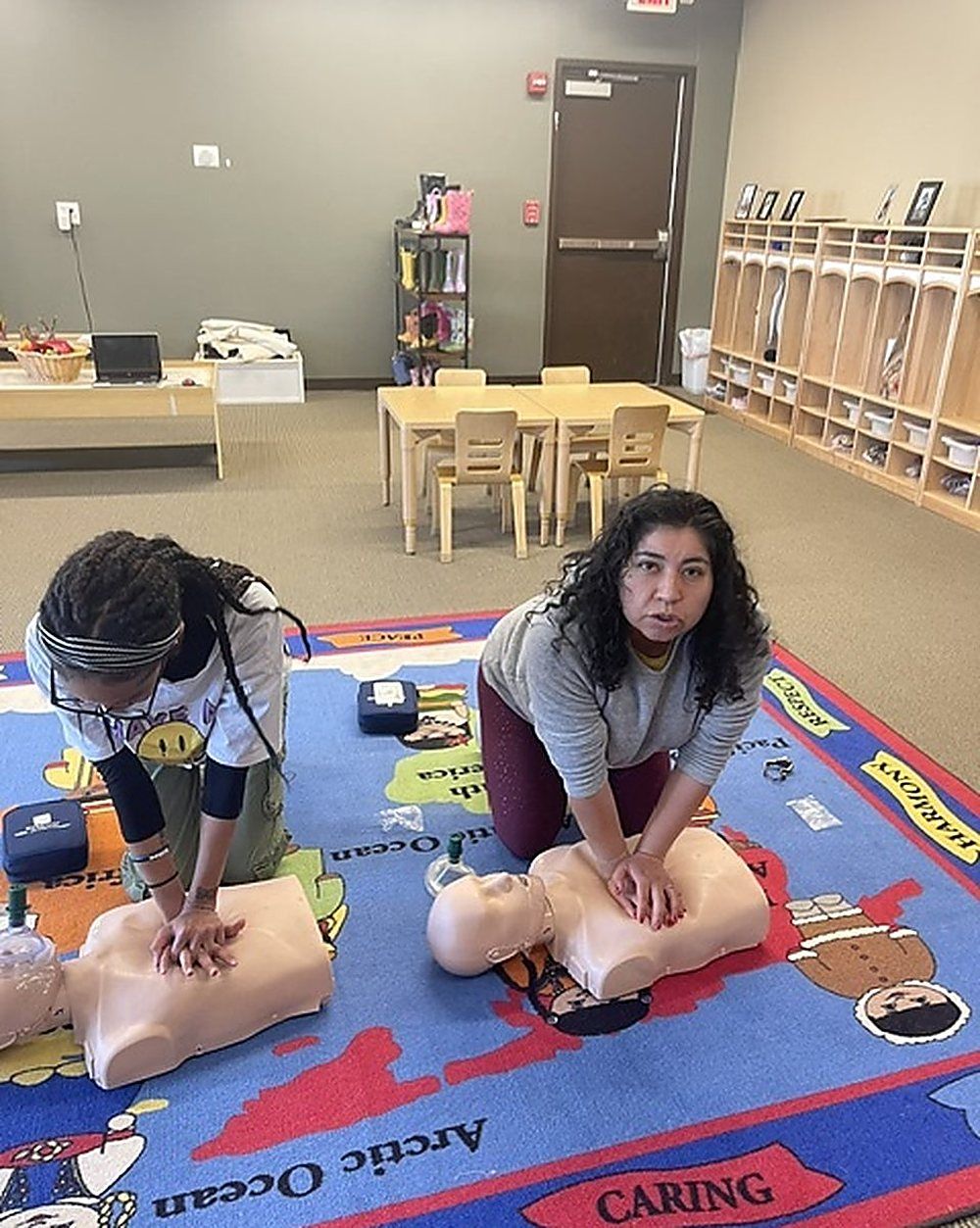
Indiana childcare providers are required to hold certification in adult, child and infant CPR, together with AED and First Aid, and that certification must include a practical hands on skills component with a live return demonstration. At least one adult with current certification covering every age group in care must be present at all times children are at the center. First Aid is renewed every three years. The course written for this is Heartsaver CPR, AED and First Aid, at $129 per person with the card issued the same day.
Why online only certificates keep getting rejected
This is the single most common and most expensive mistake directors make. A staff member finds a $20 certificate online, prints it, and it is refused at inspection, because the rule specifies a practical skills component with a live return demonstration. Somebody has to physically watch that person perform compressions to depth.
Blended learning is a different thing and it is legitimate. The coursework happens online at the staff member's own pace, then they meet an instructor in person for the skills check. Pam offers that verification at $88, which is the cheapest compliant route for someone who cannot give up half a working day.
If nobody ever watched them do compressions, it is not going to satisfy an inspection. That is the whole test.
What does Indiana require for daycare staff?
Adult, child and infant CPR together with AED and First Aid, verified by a hands on skills check with an instructor present. A certificate earned entirely online does not satisfy it, which is the most common reason a center gets pulled up at inspection.
All three age groups, not just infant
A center caring for infants and preschoolers needs staff certified across every age group in care. Infant only training does not cover a four year old, and adult only training covers neither. Heartsaver covers adult, child and infant in one course, which is why it is the standard answer for childcare rather than a family class.
A CPR party does not work here at all. It teaches the skill beautifully and issues no card, so it satisfies nothing on a licensing checklist. If you want the distinction laid out properly, read which CPR certification you need.
One certified adult is a single point of failure
The rule sets a floor: at least one certified adult present whenever children are in care. Directors who certify exactly that number discover the problem the first time that person calls in sick, takes vacation, or leaves. Then you are either out of compliance or closed.
Most centers that have been through an inspection cycle certify broadly instead, and bring the whole team onto one renewal date so it can be tracked on a single line rather than chased individually.
The two cycles that drift apart
CPR cards run two years. First Aid runs three. Left alone, those two cycles separate and a center ends up managing renewal dates staff member by staff member, which is how gaps appear. Running the whole team through together, with the First Aid module attached, collapses it back to one date. More on timing in how long CPR certification lasts.
Certifying a center without closing
Pam teaches on site across Indianapolis and the surrounding areas. For most centers that means an evening after close or a weekend session, so nobody comes off ratio during the day and no family is turned away. Larger teams usually split across two sessions, because hands on training has a real ceiling per instructor and overfilling a room produces cards without competence.
Pricing is $129 per person for Heartsaver with the First Aid module at $25, or quoted as custom group training for a whole staff. Cards are issued the same day, which matters when a start date or an inspection is close.
Check your own rule text before you book
Licensing requirements change and they differ between licensed centers, licensed homes and registered ministries. Confirm the current wording with your licensing consultant or the Indiana Family and Social Services Administration rather than relying on a summary, including this one. Tell Pam what your paperwork specifies and she will match the course to it.
Reading this is not the same as training
This page exists so the information is in your head before you need it. It is not a substitute for putting your hands on a manikin with an instructor watching. Skills fade, and the difference between knowing the steps and being able to do them under adrenaline is practice. If you are in Indianapolis, book a class. If you are not, find an AHA or Red Cross class near you.
Sources: Indiana Family and Social Services Administration; AHA Family and Friends curriculum. This page is a plain language summary of childcare training requirements, not legal or licensing advice.
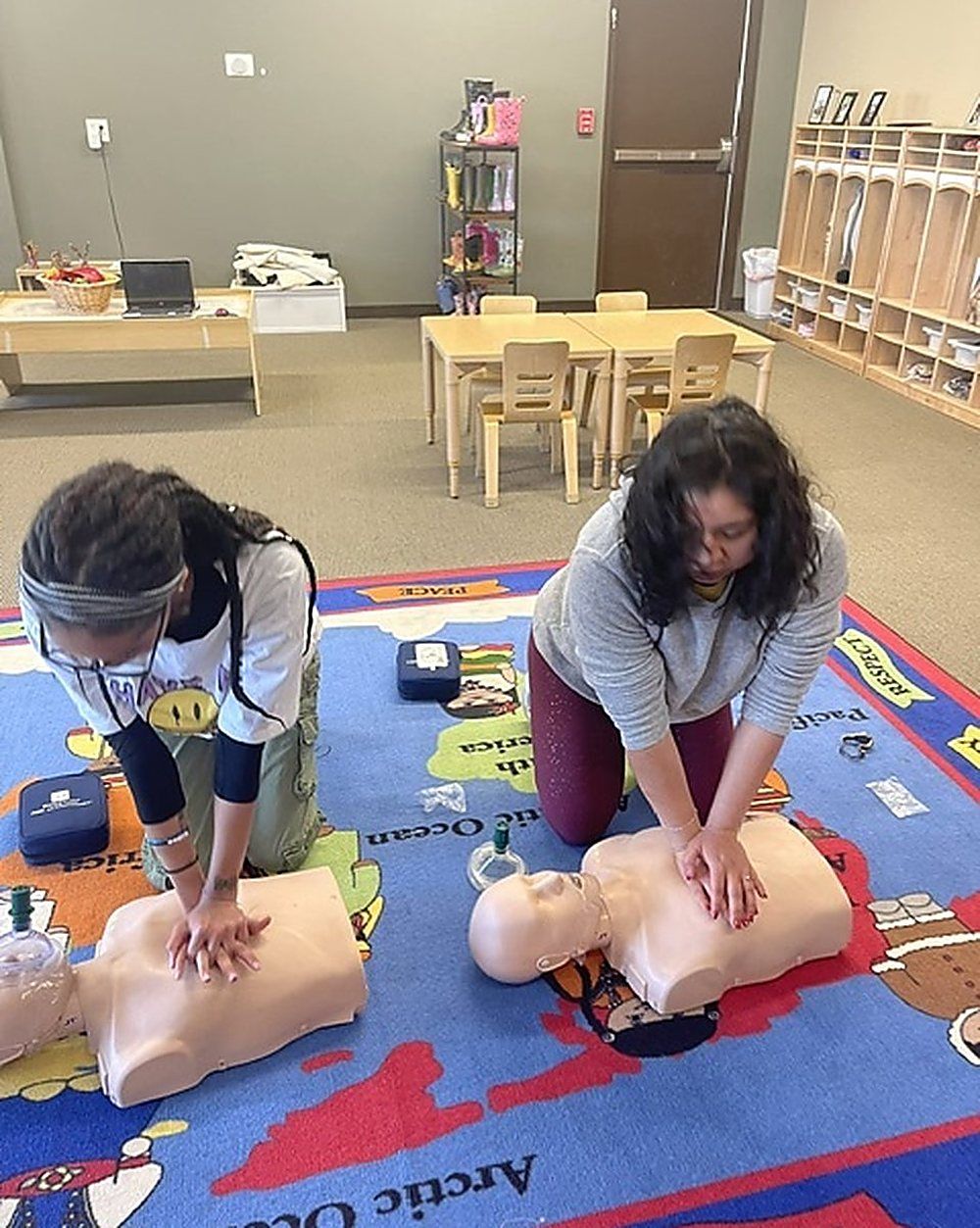
Reading gets the sequence into your head. It does not get it into your hands.
Every person in the room does every skill with their own hands, on a manikin, with a nurse watching and correcting. That correction is the part you cannot get from a page.
Director questions
What CPR certification do Indiana daycare staff need?
Indiana requires childcare providers to hold certification in adult, child and infant CPR together with AED and First Aid, and the certification must include a hands on skills component with a live return demonstration. A fully online course with no in person skills check does not satisfy it. Heartsaver CPR, AED and First Aid is the course written for exactly this.
How many staff need to be certified?
At minimum, at least one adult holding current CPR certification covering every age group in care must be present at all times children are at the center. Most directors certify well beyond the minimum, because one certified person on the schedule is a single point of failure the moment somebody is off sick.
How often does First Aid have to be renewed?
Direct care providers complete a First Aid course every three years, covering emergency treatment of poisoning, seizures, hemorrhaging and choking. CPR cards themselves run two years, so the two cycles do not line up and drift apart unless you manage them.
Does an online only certification count?
No. The requirement specifies a practical skills component with a live return demonstration. Blended learning is fine, where the coursework is online and you complete the in person skills check, which Pam offers at $88.
Can you come to our center?
Yes. Pam teaches on site across Indianapolis and the surrounding areas, including evenings and weekends so you do not have to close or pull staff off ratio during the day.
The next thing worth knowing.
When should parents take an infant CPR class?
Read thisRenewalsHow long does CPR certification last?
Read thisLegalCan you be sued for doing CPR in Indiana?
Read thisReading is not training. When you want the hands on version, Pam teaches it in your own living room. See CPR parties, or call or text Pam at 317-820-8003.