 Tiny Hearts CPR
What to do when a baby is choking
How to tell the difference between a baby who is coughing and a baby who cannot breathe, and what to do about each.
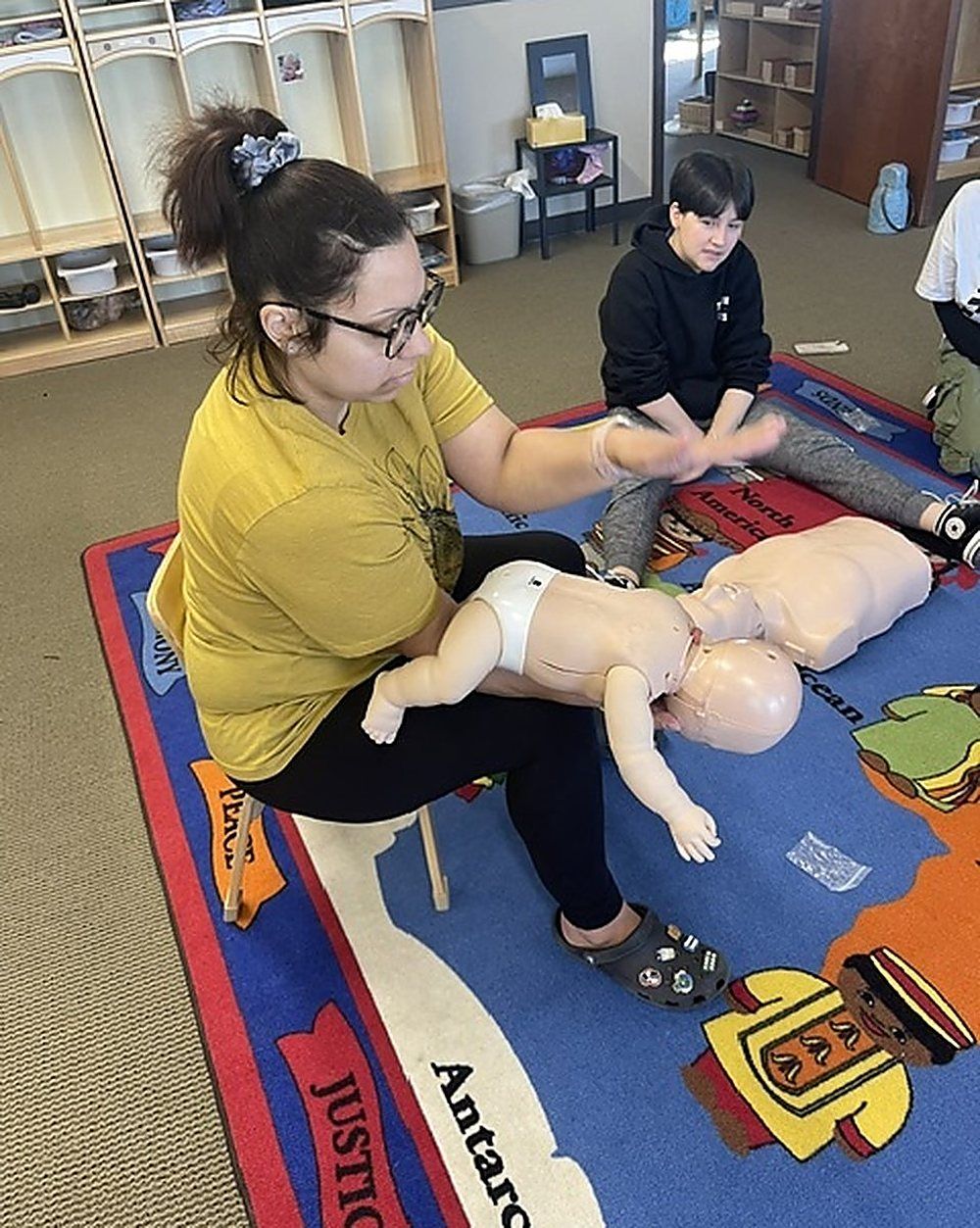
If the baby is coughing hard, crying, or making noise, the airway is still open and your job is to stay close and let them clear it themselves. If the baby is silent, cannot cry, is turning blue, or is making a high pitched squeaking sound, the airway is blocked. Support the head and jaw, lay them face down along your forearm with the head lower than the chest, and give five firm back blows between the shoulder blades, then turn them over and give five chest thrusts. Repeat until the object comes out or the baby becomes unresponsive, at which point you start CPR.
For a child over one year old or an adult, the 2025 guidelines call for five back blows first, then five abdominal thrusts, alternating until the object clears. Back blows come first at every age now. Abdominal thrusts are never used on a baby.
Noise is good. Silence is the emergency.
This is the single most useful thing to carry in your head, because it tells you whether to act or to wait. Air moving past an obstruction makes sound. A baby who is coughing, spluttering, gagging or howling is moving air, and an adult's instinct to intervene at that moment can turn a partial blockage into a complete one.
The frightening version is quiet. No cry, no cough, a look of panic, sometimes a weak high pitched noise as they try to pull air past something, and color draining from the lips and face. That is when you move.
Call for help early
If you are not alone, send someone to call 911 the moment you start back blows. If you are alone, put the phone on speaker and keep working. Do not stop what you are doing to make a call.
How do you tell choking from coughing?
By sound. A baby who is coughing, crying or making any noise is moving air, the airway is still open, and the safest thing you can do is stay close and let them clear it themselves. Silence, a weak high pitched squeak, or color draining from the lips means it is blocked and you act.
The sequence
- Support the head and jawLay the baby face down along your forearm, resting your arm on your thigh, with the head lower than the chest. The head must be supported the whole time.
- Five back blowsWith the heel of your hand, five firm blows between the shoulder blades. Firm, not tentative. You are trying to shift something.
- Turn and give five chest thrustsSandwich the baby between your forearms and turn them face up, head still lower than the chest. Two fingers on the breastbone just below the nipple line, five quick inward thrusts.
- Look, then repeatCheck the mouth. If you can clearly see the object and can hook it out, do it. If you cannot see it, do not go fishing. Repeat back blows and chest thrusts.
- If they go limp, start CPRAn unresponsive baby needs compressions. Every time you open the airway to give breaths, look in the mouth and remove anything you can see.
What about an older child or an adult?
This is the part that changed, and most people have not heard it yet. For a conscious child over one year old, and for an adult, you now alternate five back blows with five abdominal thrusts, repeating until the object comes out or the person stops responding. Back blows come first at every age.
That is new twice over. The 2025 AHA guideline update on choking added guidance for choking in conscious adults for the first time, and the earlier advice for children was abdominal thrusts only, with no back blows at all. Aligning the child sequence with the infant one leaves you one thing to remember under adrenaline instead of three.
The exception is a baby. Under one year old there are no abdominal thrusts, because the liver sits low and unprotected and the risk of injury is real. That is why the sequence above uses chest thrusts instead.
Back blows first, at every age
Under one year: five back blows, then five chest thrusts. Over one year, and adults: five back blows, then five abdominal thrusts. Never abdominal thrusts on a baby.
Why blind finger sweeps make it worse
A baby's airway is narrow and their tongue is proportionally large. A finger going in without a clear target usually just wedges the object deeper, and turns something that was moveable into something that is not. This gets asked in almost every class, and the answer is always the same. If you can see it and grip it, take it. Otherwise, keep doing back blows and thrusts.
Get them checked afterwards, even if they seem fine
Two reasons. Something may still be partially lodged, and forceful thrusts on a small body occasionally cause injuries worth ruling out. A baby who was choking and now seems completely normal should still be looked at.
What causes most of these
Food, mostly, and the usual suspects are predictable: grapes, hot dog pieces, nuts, popcorn, chunks of raw carrot or apple. Then small objects, which is why the toilet paper tube test is worth knowing. If a thing fits through a toilet paper tube, it fits in a small child's airway. Around the time solids begin is exactly when parents start booking classes, which is covered in when to take an infant CPR class.
Reading this is not the same as training
This page exists so the information is in your head before you need it. It is not a substitute for putting your hands on a manikin with an instructor watching. Skills fade, and the difference between knowing the steps and being able to do them under adrenaline is practice. If you are in Indianapolis, book a class. If you are not, find an AHA or Red Cross class near you.
Sources: American Heart Association infant CPR resources; 2025 AHA and AAP Guidelines for CPR and Emergency Cardiovascular Care; 2025 AHA guideline update on choking.
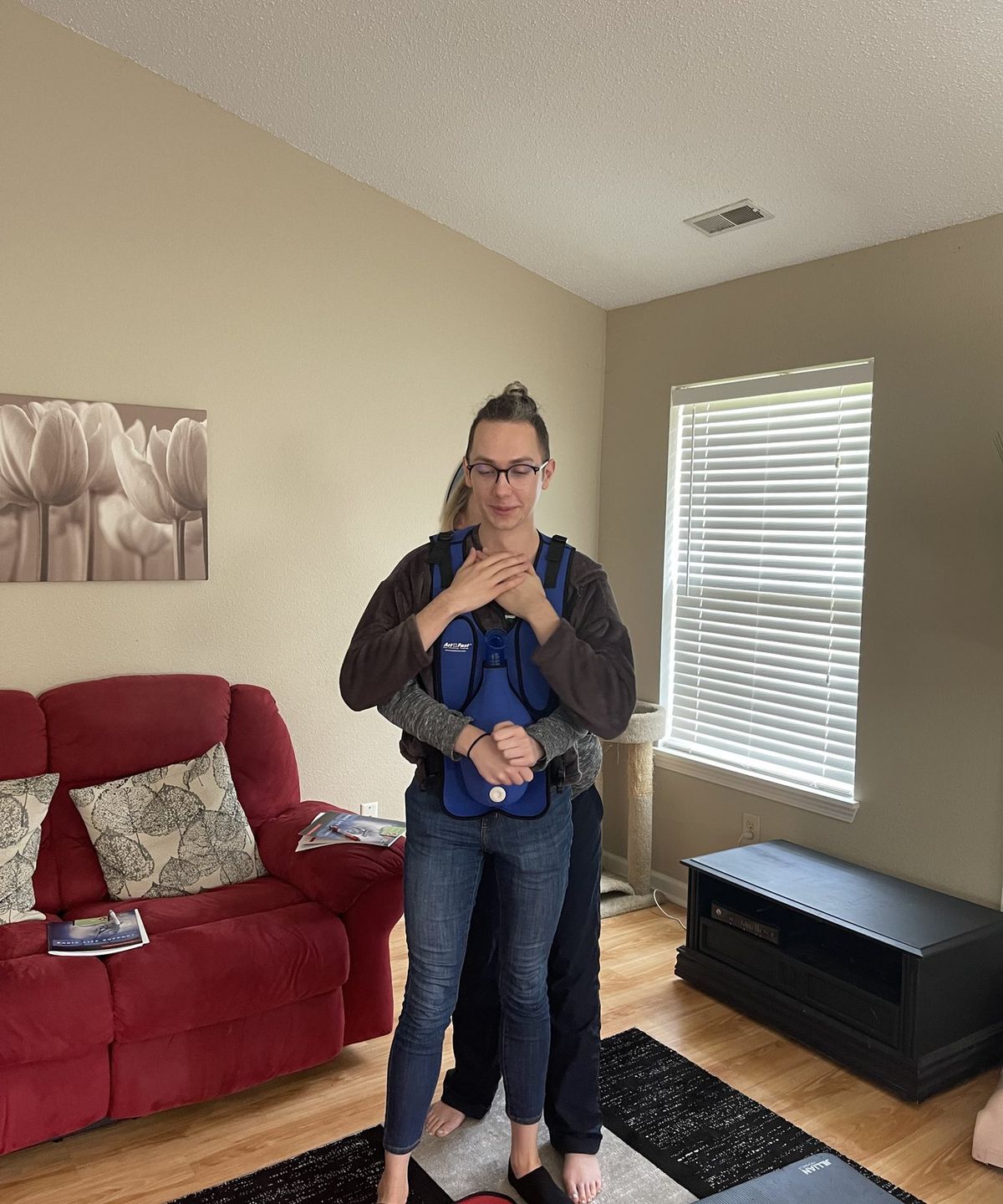
Reading gets the sequence into your head. It does not get it into your hands.
Every person in the room does every skill with their own hands, on a manikin, with a nurse watching and correcting. That correction is the part you cannot get from a page.
Choking questions
How do I know if my baby is actually choking?
A baby who is coughing forcefully, crying or making noise still has an open airway, and the best thing you can do is let them keep coughing. A baby who is silent, cannot cry, is turning blue around the lips, or is making a high pitched squeak has a blocked airway and needs help immediately.
Should I put my finger in to sweep the object out?
Not blindly. A blind finger sweep can push the object further in. Only remove something you can actually see and can hook out cleanly.
What if the baby goes limp?
If they become unresponsive, that is the point at which you begin CPR. See infant CPR depth and rate.
Is it back blows or abdominal thrusts for an older child?
Both, in that order. The 2025 guidelines call for five back blows followed by five abdominal thrusts for a conscious child over one year old, and the same for an adult, alternating until the object clears. Back blows come first at every age now, where the older advice for children was abdominal thrusts only.
Can I do abdominal thrusts on a baby?
No. Abdominal thrusts are not used under one year old, because of the risk of injury. For a baby it is five back blows and five chest thrusts, repeated.
Do I still need to see a doctor afterwards?
Yes. Any baby who needed back blows or chest thrusts should be assessed, even if they seem completely fine afterwards.
The next thing worth knowing.
Indiana daycare CPR requirements
Read thisRefreshersGrandparents, and the technique that changed
Read thisTechniqueInfant CPR depth, rate, and what changed in 2025
Read thisReading is not training. When you want the hands on version, Pam teaches it in your own living room. See CPR parties, or call or text Pam at 317-820-8003.