 Tiny Hearts CPR
The answers, before you need them.
Straight, properly sourced answers to the things parents and caregivers actually search for at two in the morning. Every clinical claim is cited to the American Heart Association, the American Academy of Pediatrics or Indiana statute.
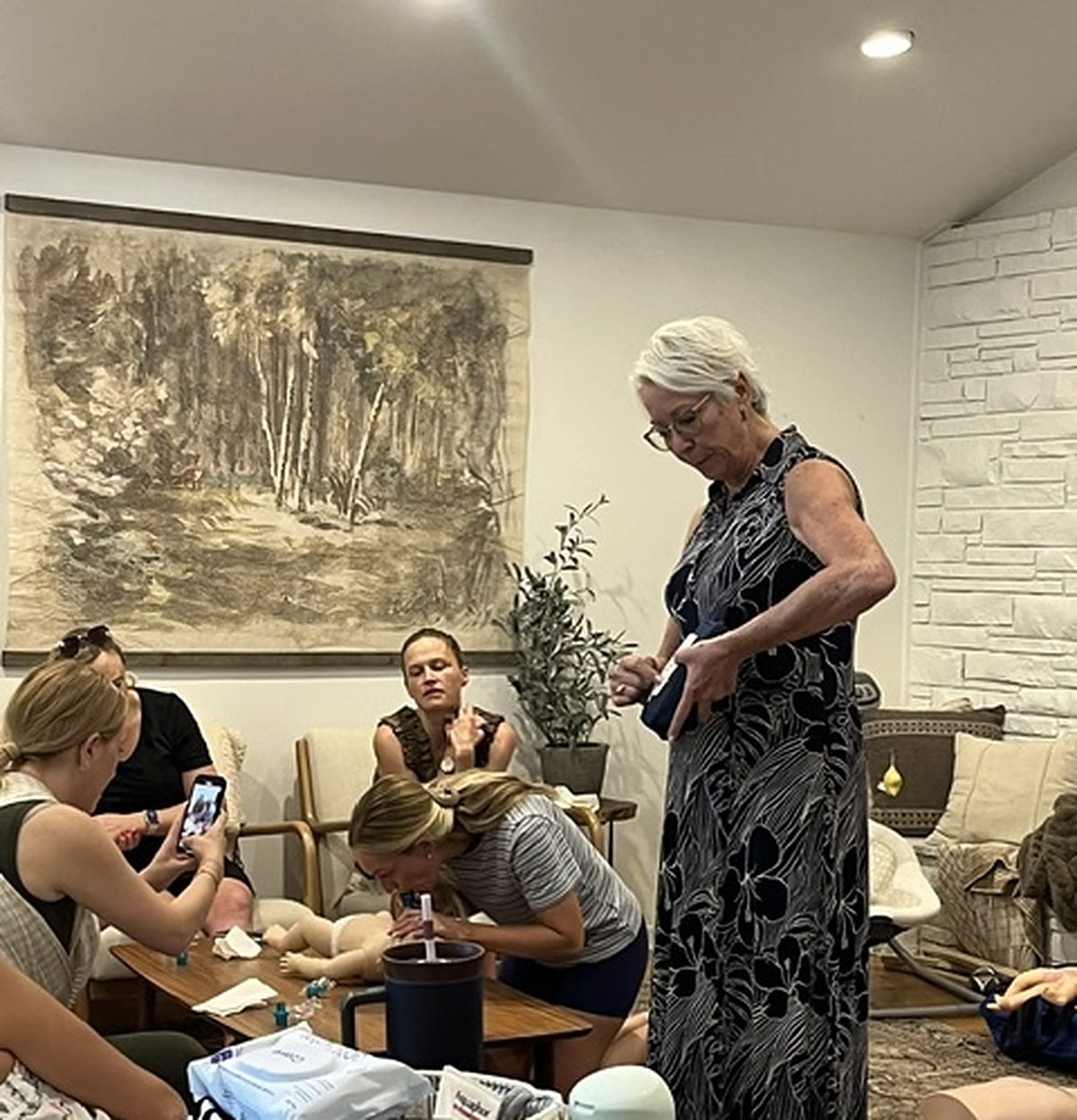
Eight guides covering the questions that come up most: when to take a class, how deep and how fast infant compressions go under the 2025 guidelines, what to do when a baby is choking, which certification your job actually requires, how long a card lasts, and whether Indiana's Good Samaritan law protects you. None of them replace putting your hands on a manikin.
Which guide should I read first?
If you are pregnant, start with when to take a class. If solids are about to start, read what to do when a baby is choking. If anyone in your house trained before 2025, read what changed in 2025 first, because their hand position has almost certainly moved.
Guides
Heartsaver CPR Class in Indianapolis: Who It Is For and What the Card Covers
What an American Heart Association Heartsaver CPR AED First Aid class covers, who needs the card in Indianapolis (teachers, daycare staff, coaches, workplaces), how long it takes,
Read thisGuideInfant CPR Class in Fishers, IN: What New Parents Learn in a Two Hour CPR Party
What an in home infant CPR party from Tiny Hearts CPR covers for new parents in Fishers and Hamilton County: infant and child CPR, choking response, hands on practice for everyone
Read thisGuideBaby CPR Class in Carmel, IN: Planning a CPR Party Before the Due Date
What an in home baby CPR party from Tiny Hearts CPR covers for expecting parents in Carmel and Hamilton County: when to schedule it before your due date, who to invite, what the AH
Read thisTimingWhen Should Parents Take an Infant CPR Class?
The two windows when parents actually book, and why waiting until the baby arrives almost never works.
Read thisTechniqueInfant CPR Depth and Rate: What Changed in 2025
What the 2025 AHA and AAP update actually changed, including the technique most people were taught and should stop using.
Read thisChokingWhat to Do When a Baby Is Choking
How to tell the difference between a baby who is coughing and a baby who cannot breathe, and what to do about each.
Read thisChoosing a classWhich CPR Certification Do I Need?
Three courses, three different purposes, and an expensive mistake if you book the wrong one.
Read thisRenewalsHow Long Does CPR Certification Last?
Two years on the card, but skills and guidelines move faster than that.
Read thisLegalCan You Be Sued for Doing CPR in Indiana?
The second most common question in every class, answered properly rather than reassuringly.
Read thisFor directorsIndiana Daycare CPR Requirements for Staff
What Indiana actually requires of childcare staff, why online only certificates fail, and how to get a whole center certified without closing.
Read thisRefreshersGrandparents and Infant CPR: What Changed
The people most likely to be alone with the baby are often the ones whose training is oldest.
Read thisWhy a CPR instructor publishes this for free
Because the alternative is what is already out there. Search any of these questions and you will find pages written to sell an online certificate, hedged into uselessness, or last updated before the 2025 guidance changed. A parent at two in the morning deserves better than that.
Pam teaches across Indianapolis and the surrounding areas. If you are not in Indiana, take these pages and go find a class near you through the American Heart Association infant CPR resources or the American Red Cross. The goal is that more people can do this, not that more people book with her.
If she did teach your class, leaving a Google review is the single most useful thing you can do for her.
About these guides
Are these articles a substitute for taking a class?
No, and every one of them says so. Reading about compression depth does not calibrate your hands. These pages exist so the information is already in your head when you turn up, and so that people searching at two in the morning find something accurate.
Who writes these?
They are grounded in published guidance from the American Heart Association, the American Academy of Pediatrics and Indiana statute, with the sources linked at the bottom of each page, and reviewed against what Pam teaches in class.
How current is the clinical guidance here?
It reflects the 2025 American Heart Association and American Academy of Pediatrics guidelines, including the change away from the two finger technique for infant compressions.
The next thing worth knowing.
What to do when a baby is choking
Read thisChoosingWhich CPR certification do you actually need?
Read thisTimingWhen should parents take an infant CPR class?
Read thisReading is not training. When you want the hands on version, Pam teaches it in your own living room. See CPR parties, or call or text Pam at 317-820-8003.